

1.
I was talking to a friend about book promotion a few years back, and I explained that a big part of selling your book is to appear on podcasts. And she said:
Wouldn’t that discourage people from buying your book? If they listen to the podcast, they’ve already heard you talk about all the good parts.
And I thought: no, that’s silly, she can’t be right. Everyone knows you’re supposed to go on podcasts. The publicist for the book I had just written worked hard to get me on the more popular ones, so she must know it helps book sales.
But the comment stuck with me, and so the next time I was on a Zoom call with my publicist, I mentioned my friend’s remark. My publicist looked as bored as a person could be and said:
Huh. I never thought of that. Yeah, maybe?
We never discussed it again. She kept booking me on podcasts, and I kept going.
2.
I subscribe to a few Substacks that offer tips on growing your subscriber base. One of them tells me: Don’t post too much; never more than once a week—don’t let your subscribers get sick of you. Another says: Post a lot—at least twice a week. Make sure your paid subscribers appreciate the value of their subscription.
3.
I listened to an episode of Advisory Opinions, my favorite legal podcast, that was about how to get into a top law school. (Who knows? I’m not too old to consider new career options.)
The hosts interviewed the associate dean of admissions and financial aid at Yale Law School and the dean of admissions at Harvard Law School. They discussed interview questions, which are given to the applicants in advance. The Harvard dean talked about a question she was particularly proud of:
What’s an example of a time when you changed your mind about something?
She explained that this is an excellent way to gauge whether prospective students are open-minded, which is apparently something the best law schools are looking for right now.
This does seem like a good trait. But does screening applicants based on their answers actually result in a more open-minded cohort of accepted students? Can’t even the most dogmatic and inflexible individuals come up with answers (again, these questions are given out in advance) that make them appear open-minded and accepting?
The podcast hosts—usually sharp and critical—never asked.
These examples all involve
a) a proposed method for getting something that people want
b) that is presented confidently
c) with no data that supports it
d) and no apparent interest in getting such data.
One of my motivations for writing this post was reading Helen Lewis’s discussion, The economics of writing a book, which draws on Caroline Crampton’s post, I’m done with social media. The gist of both of these pieces is that all the usual advice about selling books doesn’t work. Most of the things that publicists ask you to do are a waste of time. It’s just like what William Goldman said about Hollywood: “Nobody knows anything.”
There are a few puzzles here—why are people comfortable giving advice without evidence? Why do people (including me!) listen to and sometimes even pay for such advice? But I’m interested here in a more fundamental question: Why does nobody know anything?
Shouldn’t publicists have this information at their fingertips? The response to my question, “Do podcasts sell books?” shouldn’t have been a shrug; it should have been a “Glad you asked—I’ll send you a PDF with detailed analyses that show exactly which podcasts work best for the kind of book you’ve written—I’ve used these analyses to help promote it.”
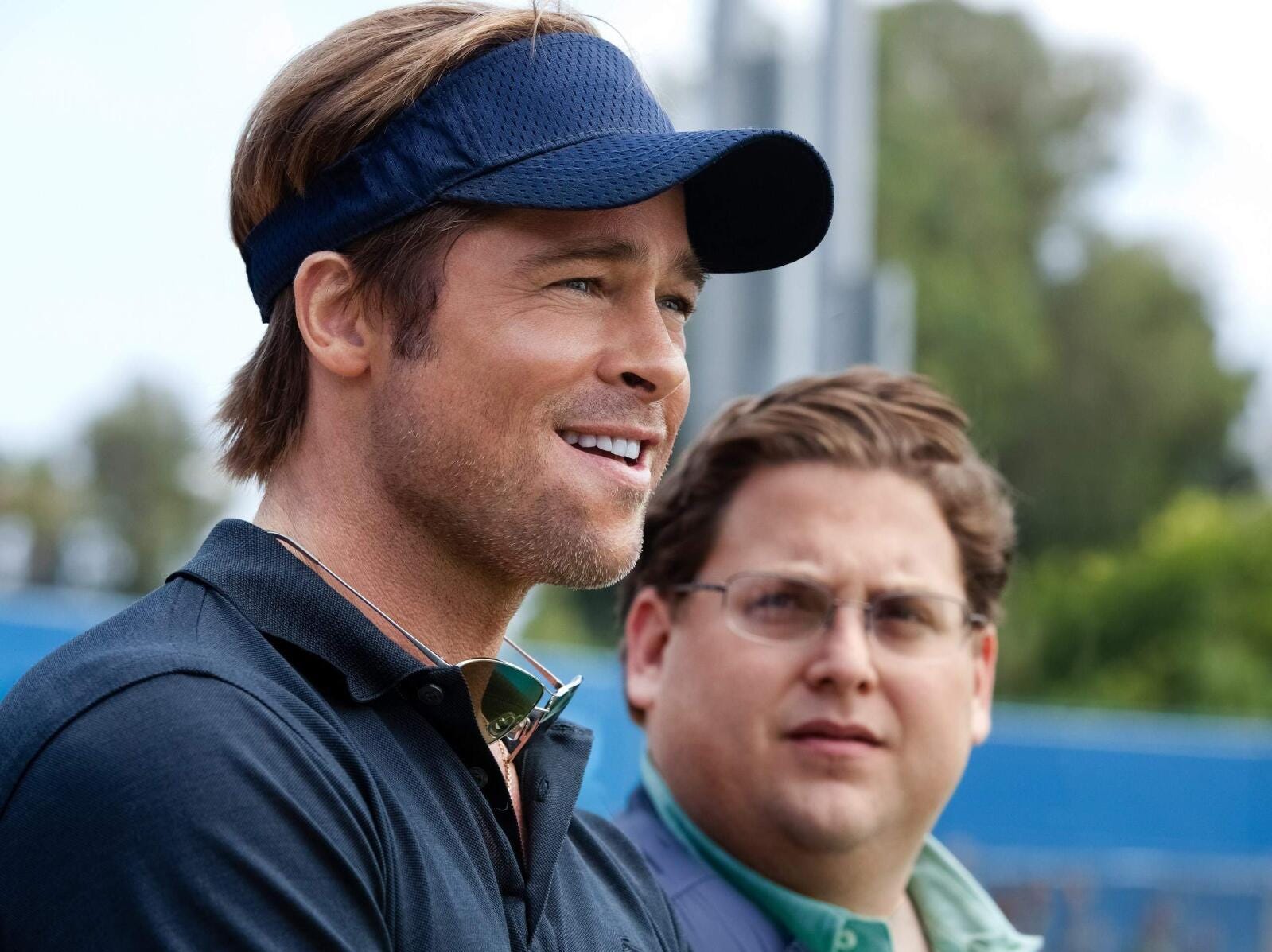
We know that this sort of analytic approach works in other domains. My wife is a fan of the Toronto Blue Jays, and she’s gotten me interested in baseball. (When I started to write this post many months ago, we were in the middle of an exciting World Series.) As part of trying to get up to speed, I read Michael Lewis’s Moneyball and watched the movie, and became entranced by baseball’s obsession with data. There’s even a word for this specific use of statistics—sabermetrics.
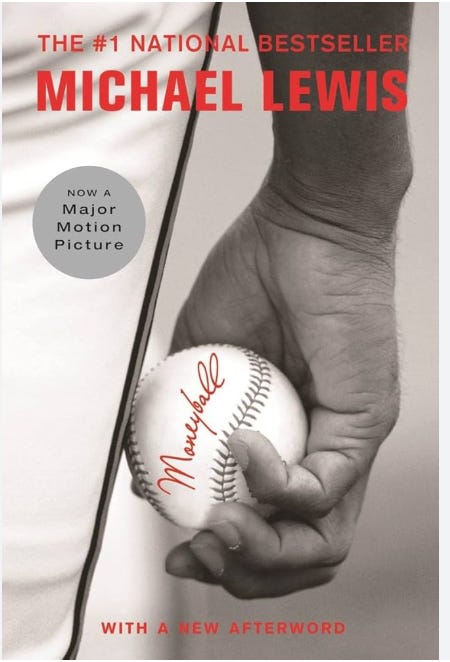
This approach has revolutionized baseball. So why not Moneyball the publishing industry? Or Substack? Or law school admissions?
It’s not like the data is hard to get. Publishers have access to the sales of every book, both online and (somewhat less reliably) from bookstores. They can run a million analyses to see what happens when you put a certain type of author on a certain type of podcast. (It’s often not hard to figure out cause and effect—if book sales shoot up immediately after an appearance on Joe Rogan, then it’s a good bet that the podcast mattered, not some mysterious third factor.) Armed with these data, they can ask: Is there a special Ezra Klein boost? How does the type of podcast interact with the sort of book being promoted? Is it just a numbers game—more popular podcast, more sales—or does the kind of podcast (political vs. lifestyle, say) really matter? And certainly it should be easy enough to look at the frequency of Substack-posting and see how it correlates with subscriber growth.
Why don’t we know?
One possibility is that people don’t really care whether these methods work. I think this is true for the law school example. I bet the interview questions aren’t about screening candidates at all. (The law schools have other, better ways of doing this.) Rather, the questions are chosen to showcase Harvard’s values to the world. This explains the otherwise bizarre choice to send out the questions in advance. They do this so they can tell everyone about them.
But this cynical account doesn’t apply to my two other examples. Publishers and authors don’t care about how to sell books? Writers don’t care about making money on Substack? Bullshit.
Another consideration is that the sort of people I’m talking about—publicists, writers, admissions officers, and the like—tend to be humanities-oriented. When they hear “regression”, they think Sigmund Freud, not Ronald Fisher. Maybe it never occurs to them to check the data. Or maybe it does occur to them, but it feels gross or reductionist or nerdy. Or maybe they’d like to do the stats but just don’t know how.
I think there’s something to this, but I can’t believe that publishers and big-name writers would just leave money on the table. Shouldn’t there be some HarperCollins equivalent of Billy Beane—the hero of Moneyball—who says: Guys, we've got to start looking at the numbers.
Here’s what I think: People have looked, and there’s nothing interesting there. Book publishing and Substack just don’t work like baseball, and there’s nothing that HarperCollins Billy Beane could tell you that you don’t already know.
When my first trade book—Descartes’ Baby—was about to come out, I was talking about it over a holiday dinner with family, and someone asked what I planned to do to promote it. I started to answer, and then my uncle cut me off and said, “It’s simple. Go on Oprah.” I was a bit irritated and said I’d love to go on Oprah’s show to talk to her about Descartes’ Baby, but I had no way to make that happen. Then I started talking about other things I planned to do—like giving a talk at my local bookstore—and my uncle looked at me as if I was just a little bit simple, shook his head, and said, “Go on Oprah. That really sells books.”
The thing is, he was right. At the time, getting on Oprah and having her promote your book was a sure route to the bestseller lists. That’s good advice, much better than my worthless plans. My inability to take this advice wasn’t my uncle’s fault!
Talking to Oprah no longer has the magic touch, so what else works? Well, you can be a famous and beloved author. (The next books by Stephen King and Sally Rooney will do well.) Or a celebrity with an interesting story. (As I write this, Lena Dunham’s Famesick is a #1 New York Times bestseller). Or maybe you should turn your book into a Netflix series or a major motion picture. That really sells books.
Or what about a massive promotional campaign? I was listening to Sarah Isgur, one of the hosts of the legal podcast Advisory Opinions that I mentioned earlier, and she talked about promoting her new book, Last Branch Standing. This involved appearances on Morning Joe, the Bill Maher show, the Ross Douthat podcast, and NPR. Does this sort of media blitz sell books? Sure does. Does it help that Sarah Isgur is a sharp and charismatic figure who knows everyone? Sure does. (Did I buy a copy of her book myself? Nope. I bought two—one for me and one for my lawyer son.)
Summing up, here’s one route to the bestseller lists.
Be the sort of person who gets invited to go on Oprah.
You can also try this.
Write something people really like to read.
That’s something else about Stephen King, Sally Rooney, Sarah Isgur, and Lena Dunham. People really like reading their books. Focusing on Substack, Tommy Blanchard put it nicely.
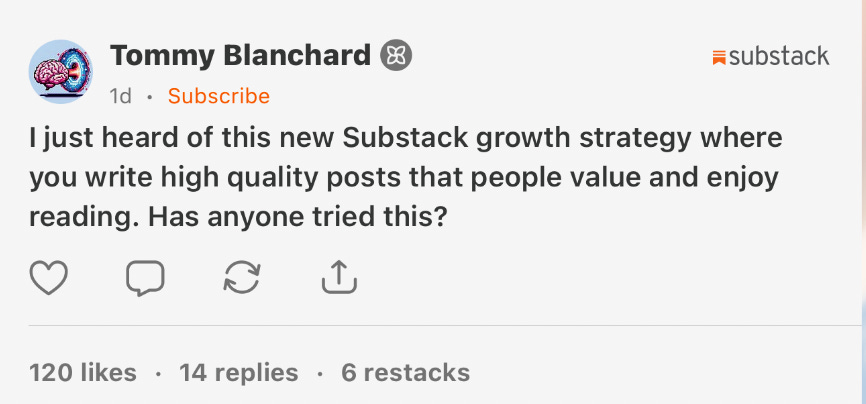
Yeah, try that.
I’ll end by saying something positive about Substack. To write a bestselling book, quality writing is not enough. You need to get a publishing house to take a chance on you, and that requires status and connections (or, failing that, excellent luck).
Substack is different. As with blogs and social media, there are no barriers to entry. Sure, reputation doesn’t hurt when it comes to building up a subscriber base (ask Dolly Parton or Andrew Tate), but writers have become popular on this site through quality alone. They start as total unknowns, the algorithm brings their posts to people’s attention, word spreads, and the audience grows. There aren’t many domains in life where you can make a living just by having access to a computer and being exceptionally good at what you do.1
Anyhow, that’s it. There is no hidden knowledge, no way to game the system, no secret Moneyball for publishing or Substack. The best advice is: Be well-known; Be very good at what you do.
But I bet you already knew that.
A friend pointed out that this is also true of OnlyFans.
Really enjoyed this, but I think there's a Moneyball angle worth considering.
Moneyball was never about making a given player better. It was about portfolio construction under a budget constraint. Beane couldn't outbid the Yankees for stars, so he built a team from systematically undervalued players.
The publishing version isn't "how do I sell this book?" It's "what kind of books, by what kind of authors, with what kind of audiences, systematically outperform their advances?" That's a portfolio question, and it has answers.
The opportunity isn't for the big publishers. They're the Yankees. They can buy proven authors and absorb the failures. The opportunity is for small presses, self-publishers, and Substack writers building toward a book. The people with a budget constraint. For them, finding undervalued opportunities is the whole game.
On the book side, one complication to add to the mix: selling more books isn't always the main goal. Often it's getting the ideas out, with selling books being more than a side-benefit, but not the sole focus. Certainly, for a lot of people, selling more books has pretty marginal benefits given that they're unlikely to clear their advance.
Another angle: once you're on a podcast, is it better to give away as much of the book as you can, even if it makes people a little less likely to buy the book, or is it better to play a little coy and give people an intriguing sense of it but making clear that there's still a lot of juice left to squeeze.
Which I guess comes back to your point -- there are some books that are really good and hearing them discussed on a podcast only scratches the surface of what sitting with the book for several hours will provide. Others, less so...